Crossbow Hunter-ed Certification On-Line in Maine

I took the on-line course today in case I crossbow hunt in Maine during firearms season and printed  my cert. card. It was very thorough. I was hoping that it included archery season. It doesn’t! But would be great, up close, for bear or in residential areas that have noise concerns for deer hunting. There is a fee to get the crossbow license too.

The course covered general hunter-ed safety, first aid, ethics and responsibility, crossbow use, compound vs recurve crossbows, broadheads, types, and how they kill,  hunting scenario video’s, Tree stand hunting and safety with crossbow, shoot and no shoot scenarios, game care, and more…Much of the course seems to be a remake of the general bowhunter-ed with a focus on crossbows. Took a few hours to take it. Glad I did it!


Details below at the website. Here in New Hampshire we do NOT require a Crossbow Cert. but must follow the laws pertaining to crossbows in NH. Be wise and study up if you are new to Crossbows. You must de-cock your bow before placing it on or in your vehicle.

https://www.crossbow-ed.com/maine/ 

The website says;

“Get certified in 3 steps.

  1. Study and pass the $30.00 online course.
  2. Finish any other requirements.
  3. Get ready to go crossbow hunting!

Do you need Maine Crossbow education?

Any person (resident or non-resident) who is 16 years of age or older and applies for a crossbow hunting permit must hold a valid license to hunt big game. In addition, he or she must either:

  • Show proof of having successfully completed an archery or firearms hunter education course and a crossbow hunter education course OR…
  • Provide evidence of having held any valid hunting license and a valid permit or license that authorized the use of a crossbow. (Junior hunting licenses and apprentice hunter licenses are not valid.)

Course Requirements

You must be at least 10 years old to take this online course.

There is no residential requirement to take this online course.

Do I have to take an online exam?

The Final Exam is the exam you take at the end of the online course. You must score at least 80% on the exam to pass. You have unlimited attempts to pass the exam. If you don’t complete the exam in one session, don’t worry. When you log in later, you will be taken to the first unanswered question of the exam.”


###

Check it out!

The Whitetail Rut Cycle Begins Anew: A Hunters Thoughts…

A hunters thoughts…August, like right now,  I believe, in New Hampshire is roughly when the white-tail deer pineal gland (part of photoperiodism- The hours of sunlight each day)  in bucks and does begin circadian clock-like signaling hormone changes. In the case of bucks, these hormones cause the blood to stop flowing to antlers (and they harden) and the drive to mate becomes increasingly important. Antlers are fighting tools, deadly knives and swords if you will,  to  attempt to kill each other for the chance to mate.

The velvet on antlers which house the multitude of veins that carry calcium that grow the bone-like antler structure begin to dry up after mid August. Males will begin to buddy-up in a bachelor group and play spar with each other and work the dried velvet from antlers on trees and bushes.

Sex and mating desire become ever increasing while the does pineal gland hormones times the beginning of estrous. Estrous is when does are fertile and receptive to mating. This occurs some time between mid October and mid December.

We tend to call that estrous time, THE RUT.

In my experience, the RUT peaks around November 20 give or take a few days and after October 31st is when deer movement and activity is more visible. This is when bucks often let their guard down to chase and mate a doe, often in disregard to danger.

Perhaps too, some hunters, like myself,  can feel the change in the air, around this time and thoughts of hunter preparation are under way. I wait all year for this time, to really come alive! I liken it to renewal, we hunters too, become part of the Rut. 

September is a time for bucks to hang out together away from the does and spar, friendly at first. Does and fawns eat aggressively to build fat stores. Deer are crepuscular creatures, meaning they are most active at dawn and dusk. 

In October, I discover,  the night air carries the scent of emerging tarsal gland scent. Tarsal glands give off this strong scent to give notice to bucks and does. Once you have smelled tarsal enough, as a hunter, you can recognize it. I smell it’s pungent aroma beginning in late October even at my home at dusk. If hunting, you can sometimes wind that a buck is nearby ahead or you. 

I find that sand pits are a great place to see deer tracks in the fall and to identify buck, doe and fawn/yearling tracks. Age often rounds a hoof front and its width and length tells about age and size. I believe bucks like fields and sand pits as much as does do as they see each other and when they can’t see, they can ID the deer by the interdigital gland secretions between the split in the hoof. 

It is perhaps an Axiom for serious hunters,  that during the Rut, the mantra is “find the does and bucks will not be far away.” 

Beware of Buck Lockdown however, near to the peak of the rut, bucks will not leave a receptive doe and will stay with her, thus he is no longer searching and moving. Some hunters might say; “Where did the deer go?” 

I like hunting the early part of the rut curve as bucks are searching as are the does. I have observed does heading toward buck bedding areas at dusk. She is going out on a hot date!

I hope you had some fun reading this article. If you did, you can read more at the article i Tick, Tock below from Len Lee Rue III.

Tick, Tock

Good Hunting!


Traditional Archery; The pendulum swings? Bowhunt too!

Shooting a cost-effective traditional recurve or long bow barebow (no sights) in your back yard or at a 3D shoot.

It’s just great fun and trains your mind! It’s quiet too, so it won’t bother the neighbors. I like it because it is great for arm, chest and back muscles and coordination. And it sharpens your conscious mind in terms of self-awareness of breathing and muscles just like shooting a rifle. 

I have two inexpensive, but accurate, takedown bows (Samick Sage) of 45 pounds and a 50 pound OEELINE Bow below. Only $115 to $130 dollars each for bow and string. Can’t beat the cost-effective nature of traditional archery!


Getting Started?

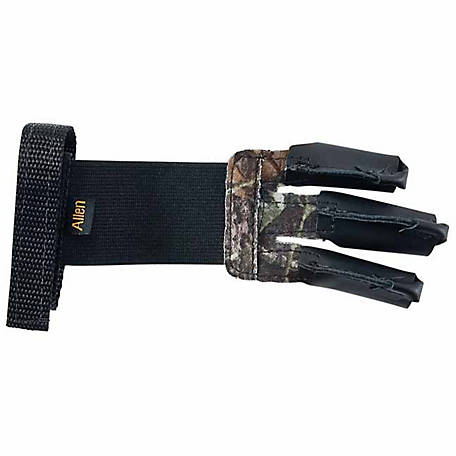
Purchase a half dozen starter arrows can be purchased for $30 to $60 dollars or so. Very inexpensive setup as compared to a compound bow. You will need an arm guard and a shooting glove or finger tab. 

Allen Super Comfort Archery Glove, 60335

Shooting Glove

Finger Tab

Bear Cordura Arm Guard

Arm Guard

If you are just starting out, I would join a sporting club and find an experienced traditional archer willing to help. 

I have been shooting recurves and long bows for more years than I care to count. I’m picking up my recurve to see if I can meet my hunt expectations and have some 3D Archery fun.

 Arrow spine and length charts on-line can help you find a good shooting arrow of aluminum or carbon or even Port Orford cedar. Buy a bow square and knock points and a crimp tool. 

Brace height is the distance from the string to the inside bow grip some call the throat. Many Europeans call it Fistmele – the breadth of a fist with thumb stuck out to give the correct height of a string from a braced bow, approximately 7 inches. Brace height can be adjusted by twisting the bow string several turns to tighten the string and increase the brace height, if needed.

See the chart below for a guide. Best to use your manufacturer recommendation. 


Shooting at unknown distances is key to calibrating your eye and mind. One of the best, and fun, techniques I use is to purchase a Judo point head below, screw it onto your arrow and shoot it in grass at balloons. The spring barbs catch the grass and your arrow will flip and not get lost. It is fun to hear the balloons pop! Gotcha! 

J125 JUDO Unloseable Miracle Point

The wind increases the challenge as the balloon bumps along the grass like a rabbit. I trained three youngsters to shoot compounds this way along with traditional bullseye targets and 3D Animals.


Hunting Stances

A good archery shooting stance is where your feet are a shoulder width apart and if you are right handed you will face nearly parallel to the target and your face is looking toward the right. In hunting, you must train and adjust your stance with the existing terrain however. Traditional target archers stand upright and recurve and long bow hunters stand a bit more like the letter C, hunching a bit over the arrow. Recurve target bows rarely get over 30 to 40 pounds. In contrast a hunting bow begins at 40 pounds pull at around 28 inches of draw and often 50 to 60 pounds pull or more at full draw. 

Stances can be adjusted based on the bush and terrain you are in, so experiment. My bow is canted so my eye is next to the arrow nock for better aiming technique. I use an under arrow draw method.

Draw and Anchor

Push the bow with your left bow arm and pull with your right arm. If I can’t feel my back muscles tensioning, then I am not at full draw. 

Full draw means the use of back muscles and is critical for good arrow flight, accuracy and form.  Accordingly,  I don’t try to shoot a bow that is too heavy in draw weight to start.

Your anchor point is often on your right cheek for a right hand shooter but that can change with different techniques. It is all about form, and repeating that form, just like golf and bowling. 

Release

Release is letting go of the string. Keep your arm up like at full draw and release the string in a rearward motion. Plucking the string sideways will send your arrow left or right. 

Follow-thru

After the string is released, maintain the stance for a few seconds allow your drawing arm and hand to finish its rearward motion. This allows you to create a body form which completes the release. And it looks and feels cool to do. 

 Both conscious and sub-conscious self-awareness is a large part of archery. Use of your mind, stance, form, eyes, arm and back muscles and release at the bow means a better flying arrow at the target. 

Good Shooting!

© Copyright 2021


New OEELINE Aerobow Recurve (Out of the Box) Review

I purchased this 62 inch OEELINE Aero-bow takedown recurve bow (50 pound) brand new for $115 dollars, WOW! Is this cheap junk or a great deal?  Current reviews are very positive, so lets see…

I own a Samick Sage 45 pound take down bow which is very similar in design. I have been practicing with the Samick for almost 3 weeks and getting into shape. I really want to shoot a 50 pound recurve bow for deer and hog hunting, hence the new purchase.  The new Aero-bow comes with an armguard, finger tab, Stringer and of course a string and 4 brass knocking points. (I own a knocking point tool) The bow did not come with any arrow rest. So I bought an arrow shelf rug and fur string silencers separately.

Note: I am not fond of the stringer device that came with the Aero-bow. I prefer a stringer that attaches tip to tip. I did purchase a rubber slip on limb tip protector to protect the lower limb tip from damage. 

DAY 1 – Like all new bow strings, they stretch. So once your bow is strung measure the brace height. Mine was 7.5 inches which is good. I shot the bow and remeasured the brace height at 6 inches. I expected the stretch. This bow needs a 7 to 7.5 inch brace height.  Unstring the bow and twist the string a dozen times to shorten the string. I turn the top loop end clockwise.  Restring and check the brace height again. I had to turn the string many times to get the brace height back to at least 7 inches. Shoot it again or leave it strung for a few hours to stretch the string. Remeasure and adjust. You may have to do this more than once, till the string settles in. And be sure to recheck your knock point! So far the bow strings and shoots well. Very comfortable in my hand. Very little vibration, nice!

Since I have been shooting the Samick Sage at 45 pounds, the extra 5 pounds of the Aero-bow puts a bit more weight on my back muscles at full draw. I practice to achieve a true full draw, but stop shooting when tired. It will take a week or so of close target practice shooting to build strength in my back muscles and achieve good form. 

Arrows, should be spined for the bow draw weight and arrow length. I like a helical feather design especially for broadheads. For hunting, I focus on traditional cut-on-contact broadheads. 

A New Hampshire Granite State 3D Shoot is coming up this Sunday.  We shall see if I am ready. 

Good Shooting!

© Copyright 2021


Doin’ the Twist on your .270 Winchester?

“Come on Baby”, sang Chubby Checker! If you own a .270 Winchester with the standard 1:10 twist and you are happy with shooting lighter 100-150 grain bullets, then stay with them. However, if you want to push the envelope on heavier bullets, experts suggest a new barrel on your pet rifle in 1:8 twist can allow 170 grain bullets to rock n roll. Hand Loading is key!

But before you jump to order a new barrel consider the cost, and installation. A Lilja custom Barrel at 27-28 inches is going to run about $400 to $500 for the barrel alone. See Below.

Centerfire Barrels

Installation by a competent gun smith will be an additional fee. Shipping your rifle to the gunsmith? Another add-on. You could be spending around $1000 for your new set up.  Now you have a .270 with a different twist or as modern metrics go, you have a 6.8mm rifle. Or you can purchase a whole new rifle in 6.8mm.

If you just love spending time at the target range with your new toy, then by all means do it.

But as for a hunter, maybe stick with what works, the .270 can shoot 150 grain bullets just fine and will kill Moose for gosh sakes. For just 20 more grains of bullet in a 1:8 twist, your spending roughly $1000 for 20 more grains of lead to throw down range or at a game animal. Maybe a .280 or a 7mm is a hunter’s approach. The 7mm Rem Mag shoots a 175 grain very well. If you then bought a 7mm, you would then have an additional rifle at roughly the same cost. Think Ahead!

Good Hunting!

©Copyright 2021

Buying a New Compound Bow for Deer Season?

I have had several compound bows over the years. My first compound bow is now perhaps in a museum. It was a Herter’s Power Magnum Compound. It was state-of-the-art in the late 1970’s.  I hunted South Africa with a High Country Sniper Compound bow in 2003 where the Gemsbok below fell to a Muzzy tipped arrow at 25 yards and a Red Hartebeest at 20 yards (not pictured). See my African Safari eBook on the home page. 

Gemsbok – South Africa 2003

What rings true for me is to purchase hunting compounds from major manufacturers like Bear, Hoyt, Mathews, PSE  et al, and major retailers that have a honest-to-goodness expert bow person on hand to talk to. Your bow will need string service by a tech upon purchase unless you become expert yourself. Things like string serving, knock points, peep sights, rests etc. all need to be added. I like a short stabilizer. Get a best-in-class ball release, sight and hunting rest. As for arrows and broadheads, I am an Easton and cut-on-contact broadhead fan. Suit yourself.  See the article below. 

Broadheads: Fixed vs Mechanical;Vanes vs Feathers; Straight vs Helical

Second, is value or bang for the buck! No pun intended.  I think there are great bows out there for under $700 for hunting. You don’t need to break the bank for a decent hunting bow. It is the add-ons that hit your pocketbook. I stay away from kit bows that are all inclusive if you are a serious hunter. 

If you are a super serious bowhunter and want the very best, you can spend upwards of $1700 for the bow and $500 to get it set up and get a top line, top shelf bow. 

Most shooters today attend 3D Archery Shoots. That is a great way to make bowhunting friends and have fun all year. Here in NH is Granite State Bowhunters, a great organization. I was a director for Granite State long ago and ran 3D shoots in Newton NH.  http://www.granitestatebowhunters.com/

Good Hunting!

©Copyright 2021


August is my Archery Month- Update

Ok summer is nearing a close, time to think about Bowhunter prep if you haven’t already been shooting this summer. As I am older with a stigmatic eye, I can’t use my peep sight as my eye wants to drift. I still shoot a recurve instinctive below.

And now I have my Excalibur Crossbow to reach out and touch a nice whitetail. Or find a place to arrow a wild boar. I was up in Maine at “Skinner Bog” last year and took this wild hog at 20 yards. I have always been a Muzzy Broadhead fan. It did the job and kept on going. The blood trail was short and easy to follow.

My wife loves the meat from these wild hogs and demanded that I go and get another for the freezer. “Awe, do I have to”, I said Jokingly.  I got on the phone right away. Below using a PSE Thrive 400. Wow cost effective and does it shoot tight groups.

This image has an empty alt attribute; its file name is DSC_0148.jpg

Shooting my recurve and broadhead takes lots of practice, but I make it look easy below.

Here in New Hampshire this August there are several 3D shoots by Granite State Bowhunters to prepare you for deer season. See the schedule below.

http://www.granitestatebowhunters.com/3d-schedule/

Perfect practice makes perfect. Don’t overdo slinging arrows, you want to create good habits of form and release. Once your pulling arm feels a bit tired… stop. Repeating good form and release are important. Try shooting on your knees, and create that shooting form besides standing. Be sure to shoot your broadheads or practice broadheads in a broadhead target so you know how they will fly. 

A bowhunter has a little different stance than a target shooter, in that the ground is not often level and undergrowth may cause you to move your feet. Tree stand shooting often requires that you bend at the waist to make the shot, especially when the game is close to you. If you do not bend with the bow, your string and peep angle to your face will cause the arrow to fly to a different point-of-impact. I created a mental checklist for the shot sequence. Tree branches out of way, arm and armguard clear of bowstring bend at waist, wait for best time to draw bow so your movements are not seen. After release, follow the arrow. I like luminock’s so I can see where the arrow entered. 

Good Shooting!

© Copyright 2021

6.5 Creedmoor: Hand-Loaded Nosler 129g ABLR and Hornady 160g Round Nose Deer Hunt Combo? Update at 150 yards

On my northern Maine deer hunt this fall,  I want options.  I am sold that my Weatherby Vanguard 6.5 CM with my Hornady 160 grain round nose is great for a shorter range woods hunt. The round nose has more knockout punch inside of 100 yards and is not as deflectable in brush as a spitzer. However, it limits me to just short range of say 150 yards.

Ok, suppose I am in an elevated stand that overlooks a clear-cut that is 300 yards of open stumps and out walks a wall hanger buck at 280 yards.

With just the 160 grain set-up, I would not be able to attempt a  shot.  Accordingly, I loaded up some 129 grain Nosler AccuBond Long Range bullets that I had in my cupboard to see where they would impact my 160 grain round nose scope set up at 100 yards. Guess What? The 129 grain heads hit the exact same spot as the 160 grain heads. What? Yes they did! What does that mean? It means that I can use either bullet at closer range but, more importantly, it means that I can use the 129 grain Nosler ABLR for longer range open shots with minor elevation adjustments. Wow!

I hand loaded the 129 grain Nosler ABLR’s with a near-max load of Hodgdon H4350. COL was set at 2.75 inches.  The bullets exit the barrel at just over 2800 fps and group at 1 MOA at 100 yards. I put the data into JBM Ballistics Trajectory calculator. And if I adjust the elevation to 1.8 inches high at 100 yards it is basically zeroed for 200 yards. My maximum point blank range (MPBR) is 280 yards. At 280 yards, as seen below, that 129 grain bullet delivers 1500 ft-lbs of energy. Plenty for a big whitetail deer.

UPDATE: After writing this article, I bench-rested one cold shot of each load at 150 yards with a 100 yard zero waiting 10 minutes between shots and degreased the already clean barrel at each shot. The 129 grain Nosler ABLR was dead center low by 1 inch. The 160 grain RN Hornady fell just over 2 inches from dead center. Both bullets were just over an inch apart.

Honestly, I think it is astonishing that both a light and heavy bullet of different head designs and loaded with different powders, different speeds/ballistic coefficients and cartridge overall lengths can be so close to one another, essentially striking the same spot out to 150 yards. I think a clean barrel that has been solvent degreased contributed to the accuracy of these cold shots as well and eliminated a barrel cleanliness variable. Gravity and the aerodynamic drag (BC) of the round nose beyond 150 yards will make it fall faster (19 inches) and lose deer killing energy at 300 yards. The 129 grain Nosler ABLR will lose little energy, and drop 7.5 inches at 300 yards. And can reach beyond 400 yards with sufficient energy as seen in the 129 grain data below. Which bullet do you think, inside of 100 yards will deliver more energy inside the deer? I think the round nose wins that one. But from say beyond 150 yards the 129 grain Nosler takes over the most energy delivered inside the deer. 

See the JBM Ballistics Output Data below. https://www.jbmballistics.com/cgi-bin/jbmtraj-5.1.cgi


Output Data
Elevation: 5.314 MOA Windage: 0.000 MOA
Atmospheric Density: 0.08269 lb/ft³ Speed of Sound: 1073.7 ft/s
Maximum PBR: 280 yd Maximum PBR Zero: 239 yd
Range of Maximum Height: 135 yd Energy at Maximum PBR: 1549.1 ft•lbs
Sectional Density: 0.264 lb/in²
Calculated Table
Range Drop Drop Windage Windage Velocity Mach Energy Time Lead Lead
(yd) (in) (MOA) (in) (MOA) (ft/s) (none) (ft•lbs) (s) (in) (MOA)
0 -1.5 *** 0.0 *** 2810.0 2.617 2261.4 0.000 0.0 ***
25 -0.2 -0.9 0.0 0.1 2764.4 2.575 2188.6 0.027 0.9 3.6
50 0.7 1.4 0.2 0.3 2719.3 2.533 2117.8 0.054 1.9 3.6
75 1.4 1.8 0.4 0.4 2674.7 2.491 2048.9 0.082 2.9 3.7
100 1.8 1.7 0.6 0.6 2630.6 2.450 1981.8 0.110 3.9 3.7
125 1.8 1.4 1.0 0.8 2586.9 2.409 1916.6 0.139 4.9 3.7
150 1.6 1.0 1.4 0.9 2543.7 2.369 1853.1 0.168 5.9 3.8
175 1.0 0.5 2.0 1.1 2500.9 2.329 1791.3 0.198 7.0 3.8
200 -0.0 -0.0 2.6 1.2 2458.6 2.290 1731.1 0.228 8.0 3.8
225 -1.3 -0.6 3.3 1.4 2416.6 2.251 1672.5 0.259 9.1 3.9
250 -3.0 -1.1 4.1 1.6 2375.1 2.212 1615.5 0.290 10.2 3.9
275 -5.1 -1.8 5.0 1.8 2333.9 2.174 1560.0 0.322 11.3 3.9
300 -7.5 -2.4 6.1 1.9 2293.2 2.136 1506.1 0.355 12.5 4.0
325 -10.4 -3.1 7.2 2.1 2252.9 2.098 1453.5 0.388 13.6 4.0
350 -13.7 -3.7 8.4 2.3 2212.9 2.061 1402.5 0.421 14.8 4.0
375 -17.5 -4.4 9.7 2.5 2173.4 2.024 1352.8 0.455 16.0 4.1
400 -21.7 -5.2 11.1 2.7 2134.2 1.988 1304.5 0.490 17.3 4.1


22-Jul-21 07:55, JBM/jbmtraj-5.1.cgi

Even if I don’t make any adjustment to the scope for the 100 yard zero using 160 grain scope setup , I am only 3.5 inches low at 200 yards with the Nosler, still in the kill zone, but I need a steady field rest to make those distant shots. I have a walking stick with a pop up V  rest that I have used before from an elevated stand that works well. I used it similarly from an elevated stand to take a lone spike buck at near to 300 yards a few years back. It looks like I will take both bullets on this hunt. Brush hunt with the Hornady RN and Clear-Cut hunt with the Nosler.

Good Hunting!

©Copyright 2021

Win 270 Articles in 1960’s made 30 Caliber Owners Want A .270 Winchester for its Mild Recoil – Jump to the 6.5 Creedmoor of Today

The 6.5 Creedmoor gets nocked around today by some gun writers but it is still standing because it delivers a big game bullet weight at long distances with mild recoil. As a boy and young hunter in the 1960’s,I read many of the articles  Professor Jack O’Connor had written for Outdoor Life  magazine, about the .270 Winchester and his beloved mild recoiling 130 grain bullet hand loaded with IMR 4350 or H4831 on deer, bear and moose.  As I recall velocities at the muzzle were 3100 fps or even 3200 fps.

After all is said and done, Jack, I recall, always reiterated that shot placement was key. That meant that the hunter was capable, under rifle recoil, of placing the bullet in the so called “boiler room” of the lungs often clipping the heart in the process.

Part of Jack’s art of story telling, imbedded that threaded thought of less recoil to increase accuracy. And that stuck in my mind as  it did for thousands of hunters.

My first purchased rifle was a used Savage .270. It was a great rifle. I killed my first 8 point buck with it in Southern NH back in 1975 and I hand loaded the bullets recalling they were Sierra 150 grain bullets loaded with IMR 4350 and traveling modestly around 2720fps out of the muzzle. I sold the .270 Winchester rifle years ago for a new Compound Bow instead. Yes, I have a life long love affair with recurves and compound bows too. Another Story!

Later I purchased a Ruger .338 Win Mag for a future African Hunt.  I had trained myself to handle heavy recoil! And more recently, in 2012 bought the Ruger M77 African in .375 Ruger. I love it for really big game like big Bull Moose. Ok, I digress, back to the Creedmoor. 

Today, my Weatherby Vanguard in 6.5 Creedmoor can shoot a hand loaded 160 grain bullet at muzzle velocities at 2635 fps and 150 grain bullets at the same velocity as when I hand loaded the .270 Win so many years ago. If Jack were alive today he would still love his .270 Winchester but acknowledge that shot placement was key.

Jack was a hunter, not a target shooter. But it was the target shooters that created the 6.5 Creedmoor because it had less recoil yet could still shoot accurately at distances out to 1000 yards and hit steel at 1500 yards, and not punish the shooter, taking multiple shots yet do so with hunting weight bullets of 130 and 142 grains just like the .270 Winchester.

I recall that Speer offered a .270 Win 170 grain round nose bullet but was later dropped as sales soared for long range spitzer bullets just as they are today.

The long range craze is still evident but I suggest common sense prevail and keep shots where the hunter is confident of a kill. Sure, practice at long range in different terrain but remember that your body adrenaline and excitement are not as present shooting targets. Someone said, run 100 yards as fast as you can then shoot, so you can mimic the adrenaline rush. As a young man, I often had adrenaline rushes just in expectation of seeing big game. I often think to myself, “love the adrenaline rush,  but learn to control it too.”

Often missed by some hunters who buy a new rifle, is having a state-of-the-art recoil pad to absorb as much as 50% or more of the felt recoil.

Well, I believe today we have the .270 with a metric name instead, as the 6.8mm but with a different twist rate than the .270.

If I had a walnut stocked custom .270 Winchester from years ago, I would likely still have it and hunt with it and protect it as I do for the Creedmoor for its mild recoil and terrific delivered energy.

Good Shooting!

© Copyright 2021