Full Circle – The .308 Winchester

I have been stewing on this for some time so here goes. Many of us have purchased the AR-15 or similar rifle. Unless you have lots of money to spend on ammo, it sits in the gun safe after the first 500 rounds and is a great varmint rifle but as a big game rifle it is a waste. If you are just concerned with home protection,a second amendment rifle, good for competitive shooting,  it is a great choice, don’t get me wrong.

If you hunt too, the better solution for some is perhaps the M1A in .308 Winchester perhaps if you want a semi-auto and want to hunt too.

Fact is, the more I study the .308 Cartridge the more respect I have for it for home and hunting. I have hunted Africa for plains game and believe the .308 Winchester is just fine out to 200 to 300 yards for almost all except giant eland. (no big five). Why? It is about shot placement not just power. The recoil of the .308 is considered mild to moderate and with a state of the art recoil pad it is easy for a young or newer shooter to shoot accurately.

Alas, we have been brain washed a bit, me included, to shoot bigger more powerful cartridges. I took a .338 Winchester Magnum to Africa, still a medium bore cartridge,  however it takes practice to master it’s heavier recoil. I do love the bigger bore rifles however, they deliver punch, in spades like my .375 Ruger that I hand-load. The ubiquitous and classic 30:06 is a great middle ground and it can be shot in an M1A semi-auto too.

As a reloader,  the .308 Winchester cartridge design is highly efficient and cost-effective in powder usage for reloaders. These facts when coupled with the accuracy of the .308 cartridge and bullet selection for hunting big game make it a great selection as a deer and black bear rifle at ranges out to nearly 500 yards or so or as a long-range target rifle at 1000 yards. As a simple hunting rifle that can be tack driving accurate, easy on the shoulder, ready to reload inexpensively, can be shot as a semi-auto as in the M1A, I believe the .308 is poised for resurgence.

I shot one the other day at the range out of a Remington 700 with a Leupold scope at 100 yards. Groups were astounding, just like the groups I shot out my son’s Savage .308 at 1/4 inch a few years back. Yesterday I shot consistently less than 1/2 inch groups, in fact, if the trigger was adjustable as I suggested and set at around 3 pounds, the groups would merge into a ragged hole and put a real smile on  my face. ©2015

Long Range Rifle Bullet Energy and Drop Tables

My son and I often chat about long range considerations and yesterday we talked about Brian Litz new book Applied Ballistics For Long-Range Shooting 2nd Edition (I have read his first book) and the fact that Brian is shaking up the Long Range shooting world with his plain speak on rifle bullets, rifles and twist rates but using physics to demonstrate by numbers the rationale for changes in the shooting world. It may be too much for a novice but hopefully some of you have the desire to shoot long range. It is also the remaining bullet energy and bullet stability at long range that is sufficient to make the shot count. In a hunting environment, many of us are not skilled marksman to make a clean kill on a deer at long ranges beyond 300 yards because we have few places to practice at those ranges and calibrate your scope to a particular bullet and load. But let us say that we do have a place and you have a long range rifle such as a 6mm or 7 mm or a .308 caliber rifle. The key here is what are we doing when the bullet arrives, paper punching or downing a deer or elk? It makes a significant difference in that the deer and elk require lots of energy delivered by the bullet to enter the animals vital area,provide hydro-static shock, mushroom and exit the animal.

As I have said in previous articles that as a guide you need around 1000 ft-lbs striking energy for deer and around 1500 ft-lbs for elk and some include that at these energies the bullet should meet a speed criteria of 2000 fps for a lead bullet to mushroom fully(I think that this speed varies with bullet material and construction but is still a good guide). In order to calculate striking energy at a given distance you must know the bullet diameter, the bullets ballistic coefficient either as a G1 projectile BC which most of today’s bullet manufacturers provide on the box or the G7 BC.

Chronograph your bullet speed: Then we must measure the bullet speed using a chronograph. I use an inexpensive Shooting Chrony F1 Green. (Cost $100) For long ranges beyond 300 yards the bullet must be shaped to reduce drag thus a pointed bullet is needed. Further that the shape of the tip, the o-give or curvature of the head and the body and the tail of the bullet are critical in maximizing the retained downrange energy. Another component is the twist rate of the rifle to shoot some of these bullets at heavier weights. For example the .243 Winchester needs a faster twist rate than say 1:10 to shoot bullets above 90 grains. Above 100 grains the data provided by Brian in his book Applied Ballistics as well as his other books and DVD’s on shooting that the Long Range enthusiast should purchase to develop the technical skills and know how. Ok so you go to the range and shoot your bullets through a chronograph. Lets take for example my .243 Winchester which shoots a 100 grain bullet through my Ruger American 1:10 twist at 2820 fps and is amazingly still stable. It has a G1 ballistic coefficient (BC) of .373.

Calculate your drop table: Using the website http://www.jbmballistics.com/  you can go to the ballistics page and click on trajectory. There you can enter all the specifications of your bullet, BC and speed, zero range, temperature, humidity, wind speed and angle and distances you wish to chart the bullet to and it’s incremental data points. I calculate that my 100 grain bullet when zeroed for 233 yards is going to shoot 2.7 inches high at 100 yards and drop to 3 inches low at around 273 yards which is my max point plank range. This is all based on accuracy of the data. Now you can shoot to verify the data by shooting at 2.7 inches high at 100 yards and then shoot at a range for 200 or 250 yards if possible to see that there is a match for the data in the output of the data table. At 150 yards you will be 2.9 inches high, at 200 yards you will still be high by 1.7 inches and at 250 yards you will be below the zero point by 1.1 inches. I do not have a capability to test shoot further than 200 yards so that data point of 1.7 inches high will be key to see and validate. This data validation will give you great confidence in the field when hunting.

Wind is a factor that can make or break your shot on long distance game. For example I can shoot out to 273 yards as MPBR – Max Point Blank Range but with a 10 mph wind at 90 degrees crosswind the bullet is off target by 7.4 inches. So you must account too for wind speed and direction. If the wind is blowing into your face, or from behind then the wind can often be discounted to a degree for its lateral effect on the placement of scope crosshairs. By experimenting with the ballistic software you can see the effects of wind on the bullet. Good Shooting!

© 2015


Huntin’ Notes early November

First of muzzle loader season was a bust with that Nor Easter but finally getting out some. Used my fawn bleat and attracted a big fat Coyote who turned tail and ran when he saw me. Seeing mediocre deer sign in southern NH. Deer are there but need to be pushed to see them. Not seeing deer! That will happen in the opening weekend of regular firearms season next week. Rut is approaching peak by the 15th to 20th by my reckoning. Now is a great time to rattle up a buck.  I tried it day before yesterday but no luck. Use a grunt call too in combo with doe in estrus. Got to stick with the technique if it is to work.

Stay clean and as scentless as you can. I am trying too.  I wear a camo face mask if on stand and don’t spook the squirrels who can signal danger. Good Hunting!


NH Pheasant Hunt #2 I’m Late

cropped-DSC_0007.jpgWhat a difference 30 minutes can have when you arrive late to a bird release. I didn’t think I was late nor did my hunting friend Mike. But we were never the less!

That said, these released pheasants were dug in like ticks on a hound. They flew into woods and brush and without a dog to dig them out, it was difficult indeed. I ran into my long time bowhunting friend Dan Williams who is heavy into hunting ducks and pheasant these days with his now champion dog Cody, a Labrador Retriever. Seen below. After the hunt Dan puts Cody through his paces retrieving four training bumpers in a row! One from 150 yards hidden in the woods!

Dan and Cody


Along for training he brought other dogs to learn from Cody and enjoy the field. They did all of that.

Mike’s dog Sam worked the best when he could concentrate away from the other dogs.

Sam Flushed up a pheasant which I downed with a long shot from my goose gun. We saw where the bird went down. In the wood edge we sent Sam in and he found the bird and retrieved well. Nice job Sam and Mike!

We called it a day when a hen shot up in front of other hunters. Both shot, both missed. Mike shot, I shot twice giving too much lead on the first shot. The bird did finally go down and was retrieved. Ultimately I claimed the bird. Here we shall call him the community bird as we all took a shot and laughed at ourselves. We were thankful that retrievers were there to pick up where shooting skill was not “at its best” for that bird anyhow.

Camaraderie was in full blossom! Dogs too! A wonderful day afield! © 2014


New Hampshire Pheasant Hunt Heaven

New Hampshire Pheasant Hunting is easy on the hunters soul. Young hunters, Women, and a gaggle of older hunters and retrievers of all kinds can experience the thrill of the chase. Friendship abounds,dogs are trained and eager to retrieve.  In early October God paints all the trees with crimson, orange and yellow and provides a deep blue canopy overhead with puffy cumulus clouds like cotton balls scattered here and there. It is simply heaven on earth to be outside and part of this hunt. Pheasant stocking programs from NH Fish and Game have existed for years here in New Hampshire.

DSC_0014


I did not grow up as a Pheasant hunter as my father was more a deer hunter so my exposure was unfortunate. I gathered with my hunting friend Mike and his retriever Sam shown in the October cover photo. We eventually hooked up with his friends who also have dogs with them on the hunt. Some dogs are well trained and other dogs think that this is a social gathering to smell each other and play.

I found that many older men and their hunting dogs are ardent Pheasant hunters. The truth is that the bond between man and dog is inseparable like the hunter below who’s dog is thirteen years old. What a terrific friendship!

DSC_0013


Mike and his dog Sam are equally inseparable as they train together to hunt Pheasants. Sam is a young retriever and is still learning the ropes. His exposure to the hunt and to other hunting dogs will aid greatly. Mike uses whistle commands and a training collar.

DSC_0011

The hunt is a way for each to frolic and hunt together.

The truck arrived with birds for release into the NH Fish and Game regulated hunting area covering a very large area with woods and fields and released dozens and dozens of mature male and female pheasants. They take flight near and far some landing as far as a quarter mile away. Some right in front of us.

DSC_0001


Some land right in the large fields as hunters wait for the truck to leave before advancing to locate and shoot them on the fly.

DSC_0002


And fly they did! All of us decked out in orange were cognizant of our responsibilities for safe gun handling.

We had a great time! Birds were flushing everywhere. I did manage to down my limit of 2 birds.

DSC_0009

Here Sam is showing off a Hen. What a mouthful. I got the birds home and prepared them by removing the suptuous breasts and legs to my considerable culinary skills. I saved the tail feather for perhaps a floral display or for fly tying. I am ready to do that again! It was great fun and a way to introduce youth hunters to hunting in general. A very social event or private event as you like it! Good Hunting! © 2014


Get back to basics and scout for deer hunt areas.

New Hampshire Hunters should be scouting now for your next hunting area. Below is the link to NH topo maps that you can print out. These maps are an essential piece of good hunting and scouting. Combine this with deer harvest data and this could be your next ticket to your next NH deer. Get back to basics and scout! This link has maps for most towns in NH. Study Study Study!

http://www.wildlife.state.nh.us/maps/topo.html


Bowhunting NH Deer

Perhaps one of the toughest animals to hunt with Bow and Arrow is the Whitetail Deer. Here in New Hampshire it is even harder as the deer population density is lower than in many other states. Deer per square mile ranges from 4/sq mile in the North Country up to more than 20 per square mile along the seacoast. Much of the seacoast land is posted but you can ask permission. All they can say is no! Of course you are hunting in and around homes and woodlots. The deer I show on the cover was taken not far from my home in Plaistow, NH.

The season begins September 15th and Closes December 15th according to NHFG at http://nhfg.net/Hunting/Hunt_species/hunt_deer.htm 

Special Permits are still being taken (see the website above.

I have scouted in the North Country and finding deer sign regularly but here we are talking about 4-7 deer per square mile. The reason to hunt here however is that there are few houses and lots of land. Further, there is a mystery to hunting wild places. Today there is a movement to hunt with ATV’s of all sizes up north. http://www.riderplanet-usa.com/atv/trails/new_hampshire_list.htm 

These ATV’s are big kids toys for those that can afford it. A good 4WD vehicle can get you mostly to where these ATV’s go. The big plus for ATV’s is to be able to get your deer out of the woods too.

Back to Bowhunting; Today’s successful Bowhunter’s rely on scouting and knowledge of deer movement patterns and deer densities.

Reading deer sign is still the most sought after skill and is a work in progress as the season progresses toward the rut. The rut here in NH peaks around mid November and begins in September.  As each day passes the bucks will gather in small groups in September. Some sparring will begin and in October the bucks increase aggression toward one another knowing that mating season is almost upon them.

By mid October scrapes and tree rubbing are evident and the first doe is in estrous and can be mated. This is perhaps the best time to bow-hunt when the rut is not yet in full swing. Bucks during this time frame are vulnerable because they are eager to mate and come to calls and smells and remain out on the trails during the daylight.

If you are tree-stand hunting your scent is above the ground and chances are better that you will see game that is not spooked by human scent. Most bowhunter’s spend many hours in tree stands so be safe and be harnessed in to prevent falls.

Smell is the most important of all senses that a deer has in its defense. Hearing is second and Seeing is third. So if you don’t smell and have good woods skills, to keep walking sounds to a minimum, your chances increase greatly in seeing game.

I was in my tree stand for just minutes when I called that buck in with a doe bleat call. At 20 yards it was a good shot with a fixed blade Muzzy head.

Today you need to be aware that coyotes can smell blood and body gases from your dead deer so retrieval ASAP is key. New England Coyotes Canis Latrans Var. are one third wolf and are larger than their southern and western cousins and have larger jaws and muscles to eat deer.

For Hunter Education please see NHFG site below.

http://nhfg.net/Hunting/hunter_ed.htm

Good Hunting! © 2014


The .308 and 7mm08 vs 30-06 and .270 – Updated

Ok, so you don’t have lots of spare cash like me and you reload. A .308 Winchester or it’s necked down cousin the 7mm08 is a highly efficient cartridge to own for hunting or target. Many of us have opted for their larger bretheren the 30-06 and the necked down version in .270 Winchester. Most did this in their younger days like me and shot a box of 20 rounds with a poor recoil pad. That night and the next day your shoulder was not only bruised but in pain. And when it came time to reload them you brain was calling you names including “stupid” among others. Today with the advent of recoil pads like SVL- Simms Vibration Laboratory and Pachmayr Decelerator the recoil is largely cut by 50% so the only factor that adds to the reason to own a .308 Winchester is efficiency, cost of powder and a shorter bolt throw. The power is there, and plenty of it for hunting big game. Today a pound of Powder is around 30 dollars. A further argument for ownership is accuracy. As cartridges go a full cartridge is, in general, more accurate than a less full one. Lets examine a .308 round with a Hornady 150 grain head using Reloader 15 Powder. It uses 45.4 grains to push the bullet to 2700 fps out of a 22 inch barrel. In order to get the same velocity out of the 30-06 you must use 48.1 grains of powder in a longer barrel too 23.5 inches making it more likely that you will need 48.5 grains or so for the same barrel length. There are 7000 grains per pound thus with the .308 you can load  10 more Cartridges for the same velocity and the accuracy is potentially better and the bolt throw is faster and shorter than the 30-06. What about big game? Well for deer and black bear the .308/7mm08 is fabulous and has a shorter range on Moose but the 30-06 and .270 Winchester steps in as a better selection for Moose providing 300-400 fps more than the .308/7mm08 Winchester option out to 100-150 yards but so what, how often are you going to hunt Moose and African game unless you just love the fat side of medium bore as I do. All said and done, the 308 became the cartridge of choice for our Military in WW II, you can shoot faster per second and pack nearly as much energy as the 06. The M1A rifle in .308  is still highly popular at 1000 yards with open sights as a national match course cartridge. I give the .308 and 7mm08 a way thumbs up for hand loaders. The .308 and 7mm08 are at home with African Plains game short of the Big Five but most take the step up to 30-06 and 300 Win for reasons of safety and to have Enough Gun. I used .338 Win Mag and .270 Winchester as a two gun combo in Africa with my son Jason. I did not need the .338 Win Mag for Dangerous situations. Had I taken a lesser firearm than the .338 then Murphy’s Law would have put me in an untenable situation. The most important thing to remember is that shot placement is everything. © 2014

The .375 Ruger Cartridge – A Handloaders Dream Cartridge

Wouldn’t it be neat to own one rifle/cartridge that you can hunt large jack rabbits with a reduced load without blowing it to bits and the next day hunt deer with a more powerful load in the same rifle and the next day hunt the largest game on the Planet with a 300 grain Dangerous Game Load – All in the same Rifle? YES! You can only do this if you hand load your own ammo for the .375 Ruger.


Shown here is  the Ruger® Hawkeye® African with a 23 inch barrel verses my 20 inch barrel. See the Ruger website below.http://ruger.com/products/HawkeyeAfrican/models.html

My Ruger is less embellished with the ebony cap and sling on the barrel. But it is very accurate indeed with the .375 Ruger Cartridge and so versatile for handloaders.  The .375 Ruger Cartridge was a joint collaboration of Hornady and Ruger back in 2007. Wikipedia has a write-up at http://en.wikipedia.org/wiki/.375_Ruger.  

As I said, If  you hand-load you can load to shoot varying bullet sizes and energies for small game all the way up to dangerous game.


It has been tried before on older .375’s like the H&H magnum, very successfully, I might add! Most African hunters shoot a .375 H & H for everything from the 15 pound Dik Dik Antelope up to and including Elephant. Africans don’t often change loads though, most all sizes are taken with big bullets. Hornady made 220 and 225 grain heads but has not made any for a while. The 235 grain Speer Hot Core is still available as are lead cast bullets with gas checks. Sorta like “Quigley Down Under” cast bullets at 260 grains.

Damara Dik-Dik.JPG

Photo Courtesy of Wikipedia (Kirks Dik Dik)

and then shoot Impala (impala venison is fabulous)

Female impala.jpg

(Photo Courtesy of Wikipedia – Impala)

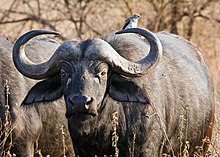
Then Shoot Cape Buffalo with the same Rifle

Serengeti Bueffel1.jpg

Photo Courtesy Wikipedia – Cape Buffalo

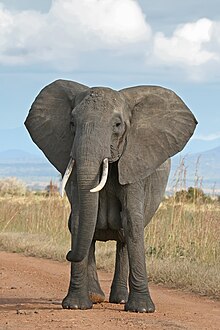
Or Elephant Below

African Bush Elephant.jpg

Photo Courtesy Wikipedia – African Elephant


Enter the newer 2007 Cartridge, the .375 Ruger that is stronger than the .375 H & H cartridge, Shorter, Has no belt to be concerned for head-space,  and fits in a standard bolt action and holds 6 % more powder than the older .375 H & H.

375 ruger unprimed new cases


DSC_0037

At left is the .375 Ruger Cartridge loaded with 235 grain Speer Hot Core bullets and the 243 Winchester at right for comparrison.

The problem for many .375 Ruger owners is that there has been little published data out there to aid the .375 Ruger Cartridge Owner to establish a cross section of bullet types and weights, powders and loading data that take you from small game, medium game. Most data is about really big game or African Game.  So I went into student mode and gathered data over the years and worked up my own loads using available .375 Caliber published data for starting loads, small game loads and lower bullet weights with copper jackets. As with all load data work from low to higher very slowly, examine the spent round for primer and case indicators with a good Reloading manual as a Reference, like Hornady or Nosler. Pay attention to case length and Cartridge overall length COL making copious notes to refer back to.

I think that for medium and small game lead bullets can be cast and SR 4759 starter data can be found for reduced loads at 1200 fps and for 220 to 235 grain heads pushing a small game load at 1500 fps to a deer load at 2100 fps for 100 yard or less shots. The trick here is to shoot either a flat point to deliver more energy on impact or a bullet that is traveling at near to 1900 to 2000 fps at impact in a spire point to mushroom adequately. I have created a new lower power load of IMR ( )  from Hodgdon®  that provides 235 grain Speer Bullets at 2400 fps for most North American Game at 200 yards and easier recoil like a 30-06. Yesterday I shot 3/4 inch 3 shot groups at 100 yards with that new load.

The data for starter loads can be extrapolated from published data by experienced wildcatters and reloaders.  After that there is a plethora of published data for Elk, Big Bears, Moose, Bison, and larger African Species up to Elephant. The .375 Ruger with my M77 African  Ruger Rifle 20 inch barrel can throw a 260 grain spitzer out of the muzzle at 2800 fps for Brown Bear or a 2000 pound Bison. Then Switch to 300 grain AccuBonds backed up by 300 grain Monolithic Solids for Africa’s Big Five. As Robert Ruark says: Use Enough Gun! I would choose a bigger rifle for close work on testy Bull elephants may be a 470 Nitro Express Double gun with 500 grain solids.

© 2014

Hunt Africa Now!

If you ever had a dream to hunt Africa now is the time! Airfare and Safari Hunt Packages are very stable at this time. A complete hunt with 6 animals including airfare and taxidermy of mounts for 2 people would be less than some western hunts for one animal.  It seems like only yesterday that I took my son Jason with me on Safari and wrote my e-book African Safari Rifle and Bow and Arrow.(click the link) the e-book is only $12.99, a bargain. Get a copy today!

Screenshot (86)

My dream was  to hunt plains game with my son and harvest animals like the Greater Kudu, Gemsbok/Oryx, Impala,Springbok, Blesbok, and Red Hartebeest. The timing of my Safari was in early August when days were warm and nights were cold. Every day was nearly the same with bright beautiful sunshine. The landscape of the hunt is very important to me. I did not want to be in heavy brush, I wanted to see Africa not be swallowed by it. I lucked out because we hunted the open bush-veld where we could often see nearly a mile in every direction. Below a spectacular View.

OLYMPUS DIGITAL CAMERA

Here a herd of Wildebeest cross our path heading far from us while on the Toyota Truck.


Typically we hunted with our Toyota Land Cruiser where we would do spot and stalk hunts or for Bow and Arrow we would use Hides near watering holes.

OLYMPUS DIGITAL CAMERA

Spot and stalk hunts were challenging as the game has been hunted and they knew what we were after. I was eager to take game with Bow and Arrow so some of my days were spent sitting in a grass blind called a hide. Game came in from all directions and it was never dull. From that Hide we saw every manner of game Blue Wildebeest, Gemsbok, Impala, Kudu, Red Hartebeest and Giant Eland. I depended 100% on my PH’s Andries Van Zyl and Joan-am for determining male from female and trophy from non trophy.

The e-book shares heart pounding Plains Game hunts by Jason and me, a Live Cheetah Capture, how we prepared for the Safari, equipment practice and clothing, rifle and bow accuracy, medical considerations, Taxidermy and so much more including a Safari Checklist. All of South Africa has hunting concessions that are fenced to control disease and predators. If the concession is 50 square miles, it is fenced or 5 square miles like mine. Game is monitored by a bevy of Veterinarians and meat is sold and or used/cooked  by the Safari Outfitter for hunters and guests. Nothing goes to waste!

Our hunt included all wild and domestic meals, beverages, wine and alcohol after Safari’s, washing of clothes, transportation.

Below is my Cape Kudu that made the SCI Record Books. Now that was a Hunt because a few hours earlier I took a fine Red Hartebeest with bow and arrow!

OLYMPUS DIGITAL CAMERA

Below I arrowed this fine Red Hartebeest, a one shot  kill! Further down is the Blind I was in and at far right of the window in the hide is just the top of the horns of this cautious beast.

OLYMPUS DIGITAL CAMERA

OLYMPUS DIGITAL CAMERA

Sunset at this Watering hole is spectacular.

OLYMPUS DIGITAL CAMERA

Live Capture of the Cheetah below. The Vet prepares a drug dart.

OLYMPUS DIGITAL CAMERA

I had no gun! There in the spotlight in front of me was a real Cheetah! Just a camera in hand in the top of the Toyota fully exposed. If that Cheetah wanted a piece of me, it would have only taken a few seconds to close the distance.

OLYMPUS DIGITAL CAMERA

Luckily the Vet was a good aim with the dart gun! All went well, safe at last!

OLYMPUS DIGITAL CAMERA

A 150 yard shot at this Record Book Impala with my Ruger M77 338 Winchester Magnum with my own hand loaded 250 grain Nosler Partitions. Sweet! My PH Andries at left. I used some camo tape on my rifle barrel and it did not spook game.

OLYMPUS DIGITAL CAMERA


My e-book is full of these terrific photo’s and so many more! This could be you!

Live the hunt with me again and again with your own copy of African Safari Rifle and Bow and Arrow!


Copyright © 2014 All Rights Reserved.